Workflow automation or an AI agent: which do you need?
Choose according to the task, the information to interpret and the actions permitted.
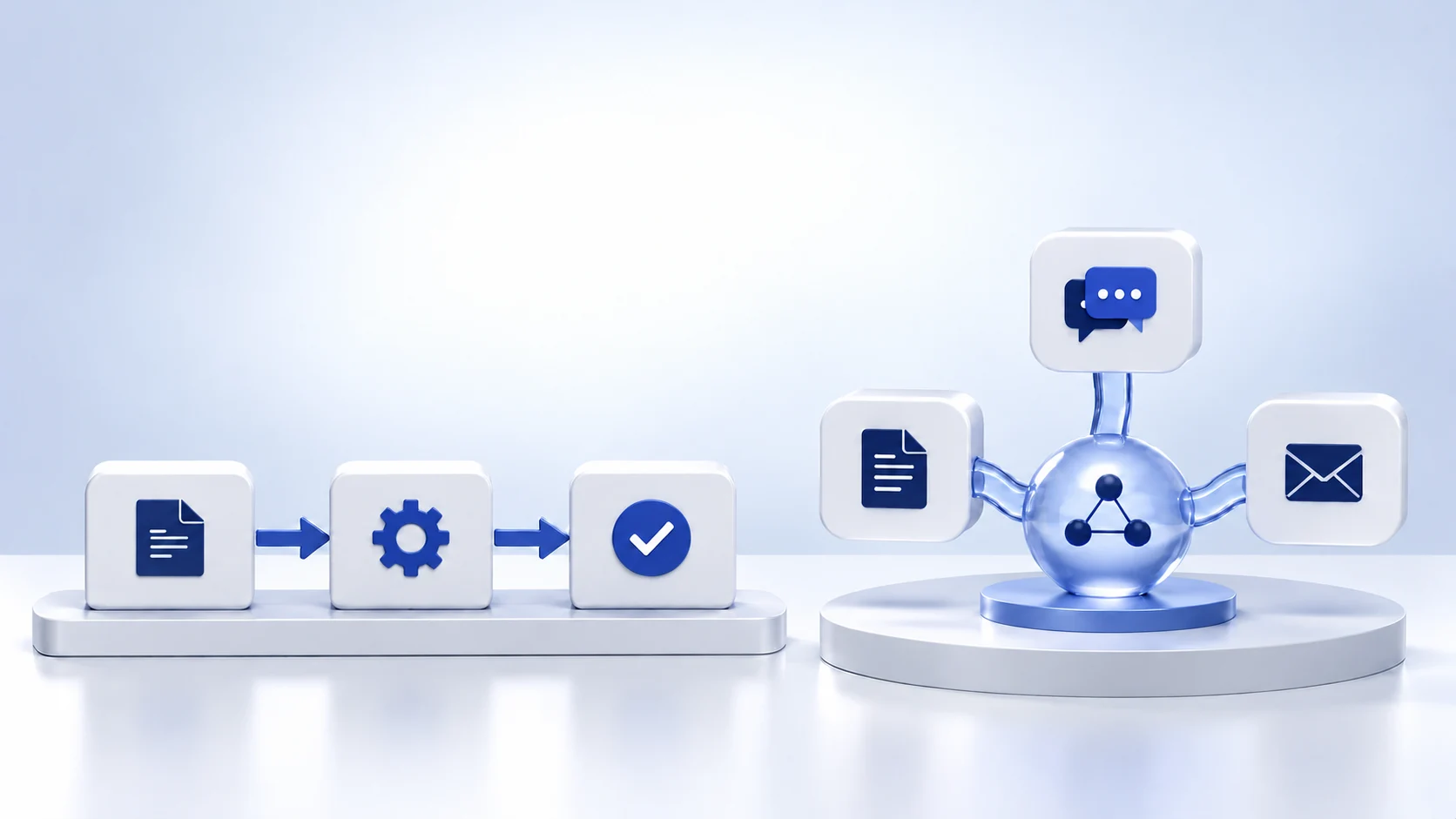
Two systems can prepare the same final record using different mechanisms. Before choosing an agent, separate the fixed steps from the parts that require interpretation.
Fixed rules still have a role
A form contains an email address and a reference. Checking required fields, creating a record and triggering a notification may only need conventional automation. A model does not need to reinvent a known rule.
Make the starting conditions, transferred fields, duplicate handling and error recipient explicit.
Use AI where interpretation is needed
A free-form email may request a quote, information or an invoice correction. AI can help classify the request, extract useful details or prepare a response, then hand the output to a defined process.
Anthropic distinguishes predefined workflow paths from agents that choose more of their own steps and tools. More autonomy is not automatically better for the task.
Combine components instead of handing everything over
For a quote request, a rule identifies the inbox, the model prepares structured fields, checks validate the required data, and the CRM receives a record or draft. A person approves the next action.
Each transition has a responsibility. An absent date should become a question, rather than an invented date. This combination of rules, model output and oversight is a useful first scoping exercise.
Ask five questions before the quote
These answers matter more than a product label. They also define what must be tested before launch.
- Which inputs are accepted?
- Which tools may the agent consult?
- Which actions may it prepare or execute?
- When must it ask for approval or stop?
- How will you check results and recover from an error?
Choose a scope that is easy to verify
Relaist prices a simple workflow and a connected agent separately. The free audit helps identify which approach fits the process described.
The first project aims for verifiable work inside your tools. Broader permissions come after sufficient results have been observed within the initial scope.
Further reading
Describe a task, your tools and the volume. The free audit reviews one workflow and provides an initial summary.
Request my free audit